
ERP Integration: The Conversation Your E-Commerce Project Can't Avoid
Mid-market businesses run on their ERP, so any e-commerce platform that doesn't talk to it properly is a toy. Here's why ERP integration is harder than anyone admits, and the CSV process we built in 2006 that's survived three ERP migrations.
 Tim Gaunt
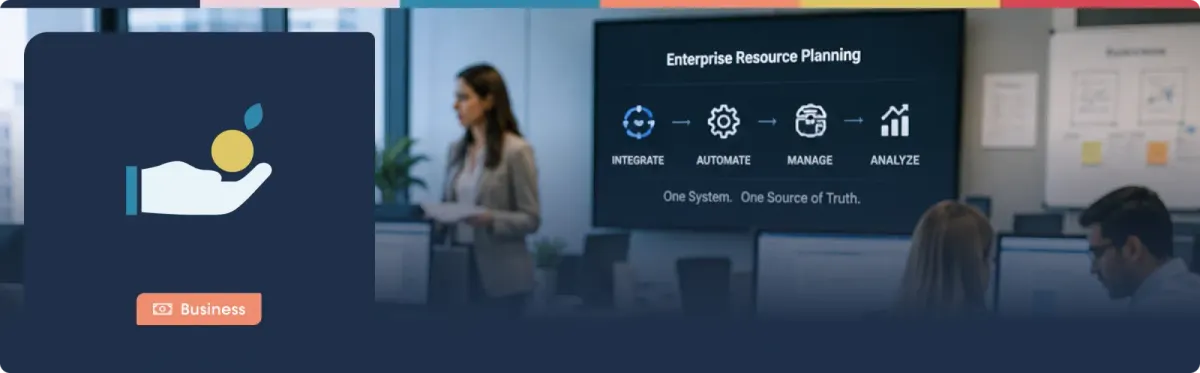
Why the ERP is the source of truth, why integrating with it is harder than anyone admits, and the 2006 CSV process that's still running today.
Mid-market businesses run on their ERP. Business Central, Dynamics, Sage, or something older that nobody likes to talk about - whatever it is, it's the source of truth for stock, pricing, customers and orders. Any e-commerce platform that doesn't talk to it properly isn't a sales channel. It's a toy.
That makes ERP integration the defining feature of mid-market e-commerce. It's also the single biggest line on the budget (we covered that in last week's iceberg post) and the place where projects most often come unstuck. So let's be honest about it.
The uncomfortable truths
The ERP is usually older than anyone wants to admit. The data is messier than anyone wants to acknowledge. The person who set it up left three years ago, and the documentation is, let's say, optimistic.
None of that is a criticism of the businesses involved. It's just what happens when a system quietly runs a company for fifteen years. The ERP didn't get messy through neglect - it got messy through use, through workarounds that became permanent, through fields repurposed for things they were never designed to hold.
If you want to work in this market, on either side of the table, you need to be comfortable with that reality. Not afraid of it, and definitely not in denial about it.
Meet the ERP where it is
Here's my favourite example of what that looks like in practice.
Joe Davies is a giftware distributor and a client of ours for around 20 years. When we started working with them, they ran a bespoke ERP called BOS. No connectors. No APIs. No modern integration options of any kind. The only way to get data out was a scheduled CSV export to a folder on an internal server you couldn't reach from outside.
So we built a process around it. Every night their system dumped CSV files. We zipped them, uploaded them, received them and processed them. Products, stock, pricing, the lot.
That was 2006.
Since then, Joe Davies has migrated from BOS to Navision, and from Navision to Business Central. That CSV zip process? Still running. We've carried it across every ERP migration because it just works, and we're only now replacing it with a proper Business Central connector, nearly 20 years later.
The point isn't that CSVs are great architecture. They're not. The point is that sometimes you have to meet the ERP where it is, not where you wish it was. A pragmatic integration that runs reliably for two decades beats an elegant one that never ships.
If you're a business planning a project
Three things to do before you brief anyone:
First, find out what your ERP can actually expose. APIs? Scheduled exports? A web portal and a prayer? The answer shapes the whole project, and "we're not sure" is a perfectly normal starting point - but find out.
Second, look honestly at your data. If product codes don't match between systems, if half your customer records are duplicates, if "available stock" means different things in different warehouses, that's work. It's better discovered now than during the build.
Third, treat any agency that calls your ERP integration "straightforward" with suspicion. The good ones ask awkward questions about it. The questions are the point.
If you're an agency or Umbraco partner
This is where Umbraco's .NET foundation genuinely pays off. Business Central, Dynamics, even ageing Navision installations - you're working in the same ecosystem, not building bridges between incompatible worlds. The skills you already have transfer.
But budget for reality, not the brochure. Assume the documentation is wrong or missing. Assume the first approach won't survive contact with the actual data. Build discovery time into every integration point, and don't let anyone (including yourself) use the word "just" about any of it. More on that in a few weeks.
The takeaway
The ERP is the source of truth, which makes integrating with it non-negotiable for mid-market e-commerce. It will be messier than expected, older than admitted, and harder than quoted - and that's fine, as long as everyone goes in with their eyes open. Get comfortable with the ERP conversation. The businesses that have it early, and the agencies that aren't afraid of it, are the ones whose projects launch.
Next week: the questions to ask before anyone signs anything. Discovery, and the three questions that reveal a project's true shape.
Tim Gaunt is the founder and CEO of TSD, a UK e-commerce agency that's been designing, building and supporting complex commerce platforms for over 20 years. This post is part of a series based on his Codegarden 2026 talk, The €200k Sweet Spot.