
Why does an old order link to a product that no longer exists?
An old order loses its meaning when it references a live product. Snapshot description, price, VAT and delivery promise at checkout so it stays true.
 Tim Gaunt

The order record stored a reference to the live product, so it showed whatever that product said today. When the product changed or was deleted, the order lost its meaning. An order confirmation should be a photograph of what was true when the customer paid (description, specification, price, tax rate, delivery promise), captured before anything moves on.
This post accompanies episode 5 of The questions we ask. The video, transcript and FAQs live on the episode page.
The order is there and the product is gone
A customer rings about something they bought two years ago. Customer service finds the order, clicks through to the product and lands on an error page. Sometimes it's worse. The link opens something with a different name and price, and nobody can say whether it's what the customer bought.
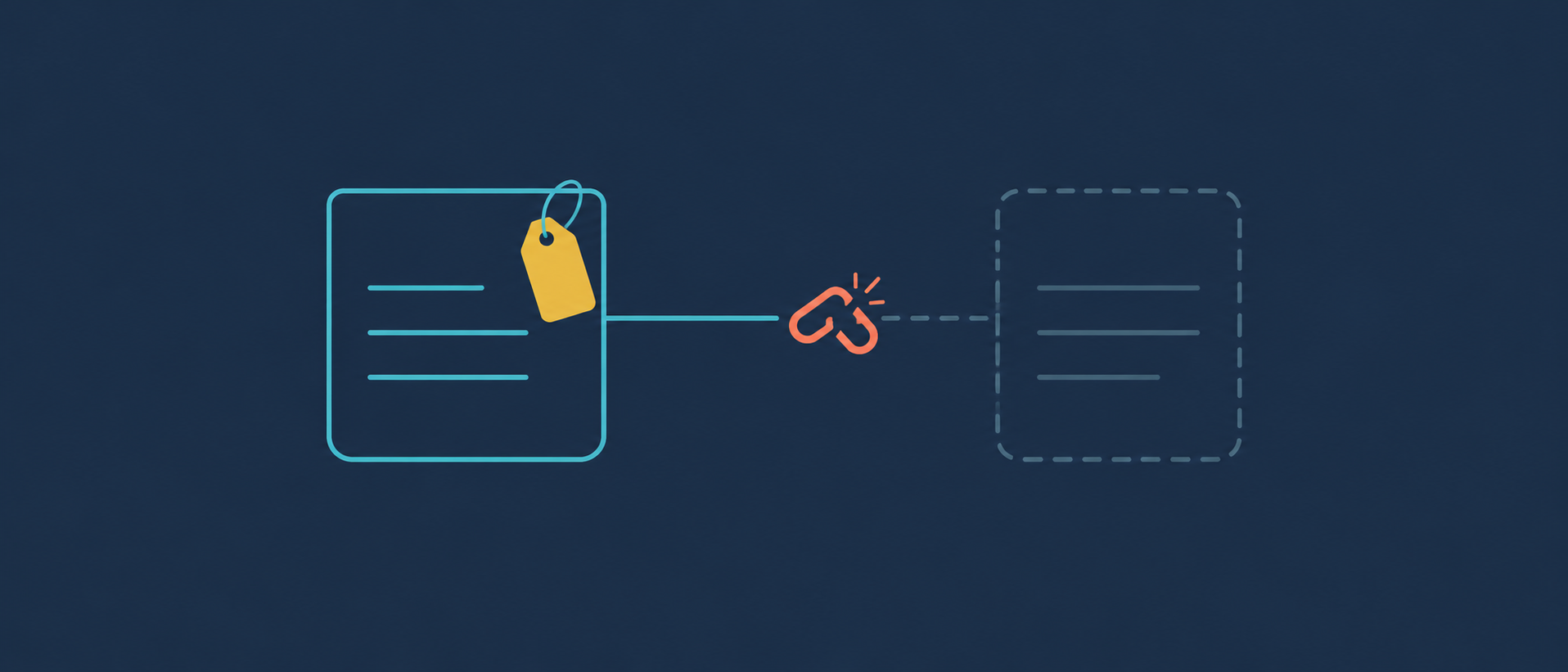
From there the team is guessing. A refund needs the price paid and the VAT charged. Warranty claims hinge on the specification that was promised, and a complaint about a wrong item is hard to settle when nobody knows what the right one was. When the order can only point at a product page that has moved on, each conversation starts with someone's best recollection.
Finance meets the same gap when an old order's figures no longer match the invoice.
Orders that point at products
Each order line stores a product ID and a quantity, and when anyone views the order, the system looks up everything else (name, description, image, sometimes even the price) from the product record as it stands today.
Developers build it like this for sound reasons. We're taught to avoid storing the same data twice, and on launch day it works perfectly as every product still exists. The trouble arrives one catalogue change at a time, which is why testing rarely catches it.
We like single sources of truth as much as anyone. There are two truths here, though.
The product record is the source of truth for what the product is now. The order is the source of truth for what was sold, and it can only do that job if it keeps its own copy. A reference is a window onto the shop floor as it looks this morning. A snapshot is a photograph taken at the till.
Some builds copy the price onto the order line and look up everything else. The total reconciles, so the problem looks solved, but the description beside it may have been rewritten twice since.
A diamond that may not exist by morning
One of our clients is a jeweller, and for them this happens with every sale.
The ring setting has a fixed price. The diamond comes from a live supplier feed of thousands of unique stones, with prices moving through the day. A customer chooses a stone and pays. The feed carries on updating, and by morning that exact stone may no longer appear anywhere on the list.
Now picture the order record saying "Diamond, £8,000".
Which stone?

Without one, someone ends up hunting through the feed for a similar one and hoping nobody checks the certificate. For a jeweller that's a serious exposure, as the certificate is the stone's identity. So the order line captures the certificate number, size, colour and price, along with the supplier's own reference, at the moment of payment and before the feed moves on.
Unique items make the problem obvious. Most retailers have it in quieter forms.
Everyday changes alter what an old order says
Tax is the one that worries finance leads most. VAT rates do change, sometimes for whole categories at short notice; the UK temporarily cut the rate on hospitality and attractions to 5% from July 2020 [verify]. If your system works out the VAT on an old order from today's rate, a two-year-old invoice can show a different figure to the one the customer paid.
Supplier prices move, and so do your own. A next-day promise can become three to five working days after a carrier change, and an old order that looks up the current promise claims you offered something you didn't. Products get renamed. Photos get replaced, sometimes with a different colourway that now sits beside an order for the original. Discontinued lines vanish altogether if someone tidies the catalogue with the delete button.
None of these feel dramatic on the day. Each one changes what your historic orders appear to say.
What to capture at checkout
Before we build, we ask one question: what on this order could change after the customer has paid? The list is always longer than someone expects. Our rule is short. If it can change after checkout, photograph it at checkout.
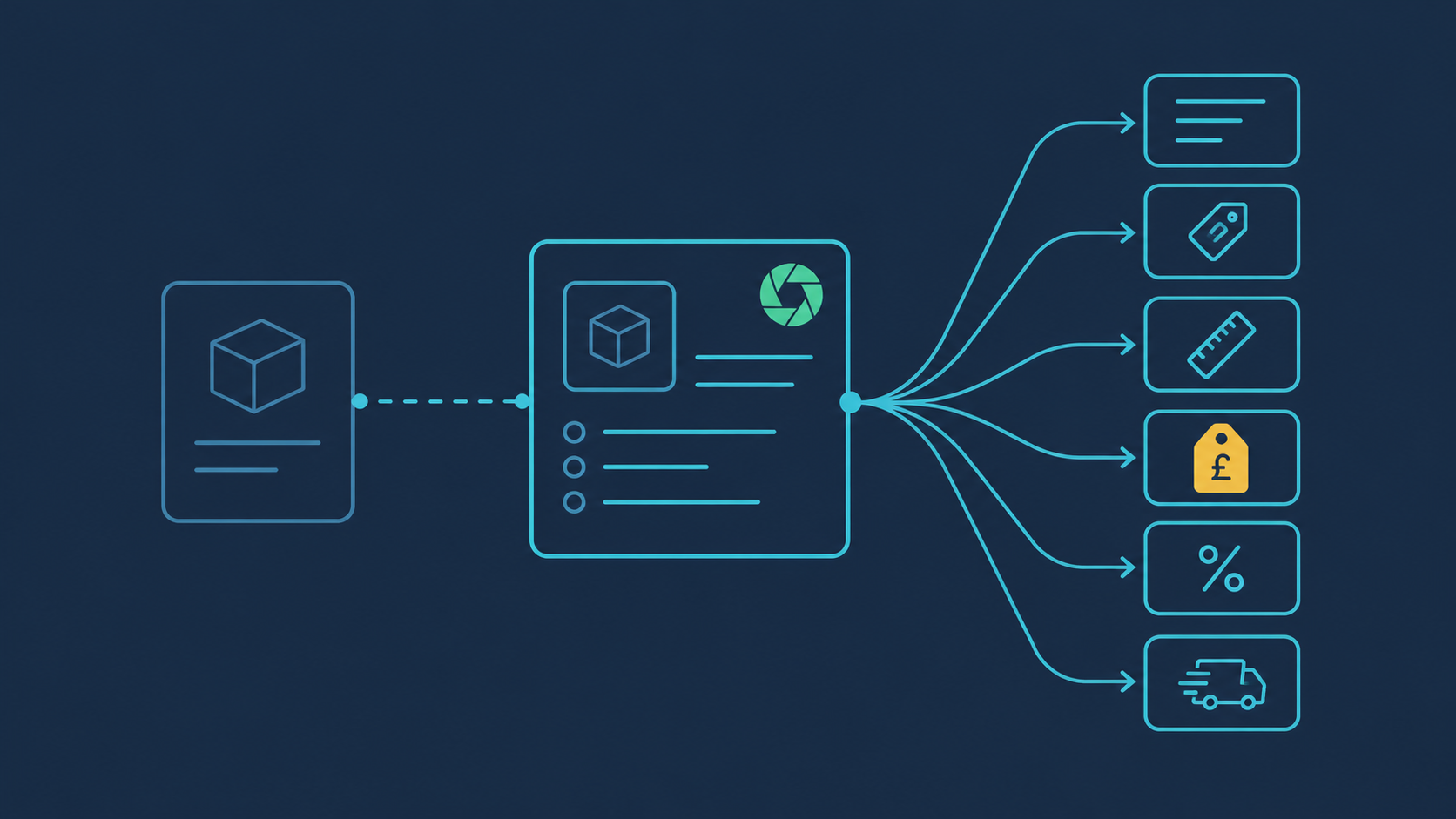
For most retailers, each order line should hold its own copy of:
- the product name and description as the customer saw them
- the SKU, plus the supplier's reference where the item comes from a feed or is made to order
- the specification that defines the item, such as size, colour, material, or a certificate or serial number for unique goods
- unit price and quantity
- the tax rate applied and the tax amount, stored per line
- any promotions or discount codes, and how much each one took off
- the delivery promise and delivery charge shown at checkout
- the main image, or a link to an archived copy of it
Keep the product ID as well, for reporting and "buy again" features. The snapshot sits beside it and carries the history.
Retire products and keep the record
Once a product has sold, we'd retire it and keep it well away from the delete button.
A retired product drops out of search and listings, but its record stays. Old links resolve to a page saying the item is no longer available, perhaps with a current alternative. Sales reports keep working.
Never reuse a product ID or URL for a different item. That's how an old order ends up showing a product the customer never bought.
Order records are evidence
Order data often ends up doing jobs nobody planned for it.
HMRC expects VAT-registered businesses to keep VAT records, including invoices, for six years [verify]. Those records need to show the tax charged at the time, so recalculating it from today's rate defeats the purpose.
Consumer law raises the stakes on description. Under the Consumer Rights Act 2015, goods sold by description must match it, and information you give about an item's main characteristics before the sale is treated as part of the contract [verify]. The Consumer Contracts Regulations 2013 also require distance sellers to confirm the contract on a durable medium [verify]. If a dispute turns on what you said about the item, an order that can only show today's description is weak evidence. Take legal advice on the detail.
Then there's due diligence. If you're preparing a business for sale, expect buyers and their advisers to test revenue and refunds against order history [verify]. An order book that can't reproduce what was sold invites awkward questions late in a deal, when time is shortest.
Check your own site with a two-year-old order
Pick an order from about two years ago, ideally one with a discount and a product that has changed since. Using only the order record (no peeking at the current catalogue or the confirmation email), try to work out which variant was sold and what the customer paid for it. Then find the VAT rate and amount, along with any promotion and the delivery promise they were shown.
Then click the product link and see where it goes.
If any answer depends on the live product, the order holds a reference. If you can't tell exactly what was sold, nothing was photographed.
Questions to ask your agency or platform
Put these to whoever builds or supports your site:
- When an order is displayed, which fields come from the order itself and which are looked up from the current product?
- Is VAT stored per line at the rate charged, or recalculated?
- What happens to past orders if a product is deleted, and can a product that has been sold be deleted at all?
- How are one-off or feed-driven items recorded on the order line?
- For orders already taken without snapshots, what can be rebuilt from invoices or old confirmation emails?
Fixing checkout protects every order from here on, and the history you already hold needs its own plan, so find out early how much can be recovered.
Where we'd start
Our Discovery work begins with questions like these, asked before anything is built. We map how your orders relate to your product and supplier data, and agree what each order needs to remember. If your old orders have started pointing at products that aren't there any more, Discovery is where we'd start.