
What do we actually mean when we say we want to sell bundles?
Bundle means at least four things: a fixed kit, a configurator, a build-your-own pool or an assembled product. Each changes stock, ERP records and VAT.
 Tim Gaunt
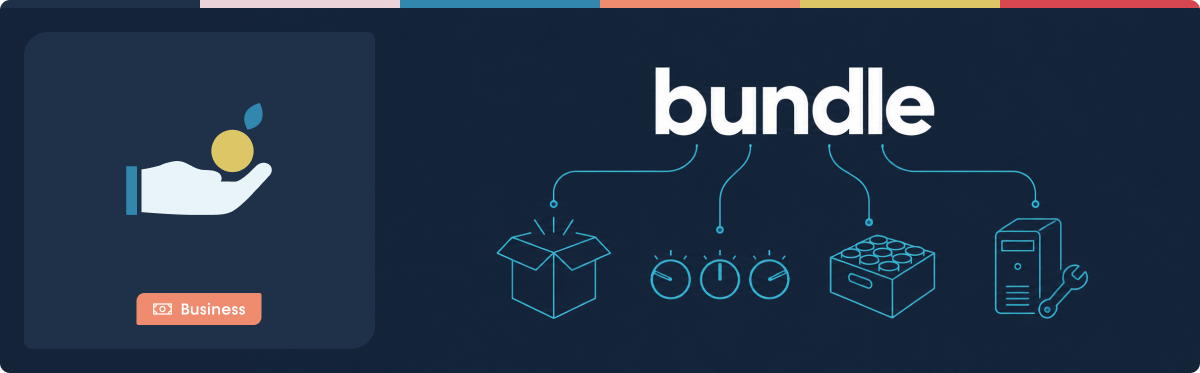
"Bundle" covers at least four different mechanisms: a fixed kit, a configurator, a build-your-own selection from a pool, and an assembled product with its own bill of materials. Each one behaves differently in the warehouse, and the ERP and the VAT return treat each differently again. Agree to "bundles" without saying which, and you've committed to one by accident.
This post is the written companion to episode 4 of The questions we ask. The video is on the episode page, with the full transcript and a few FAQs underneath.
Everyone in the meeting nodded
It usually takes about ninety seconds. Customers keep asking for gift sets, says someone from trading, and finance likes anything that lifts the order value. "Bundles" goes on the roadmap and the meeting moves on.
Nobody defined the word. Trading went away picturing a boxed gift set, while marketing had "pick any three for £20" in mind. The person who runs the warehouse wasn't invited, so they pictured nothing.
A few weeks later the agency brief says "support product bundles", and the agency makes a reasonable guess about which of four machines you meant.
Whichever it builds, half the business will think it's the wrong one.
The fixed kit
A hamper is the classic case. To the customer it's one product at one price, and the contents never change.
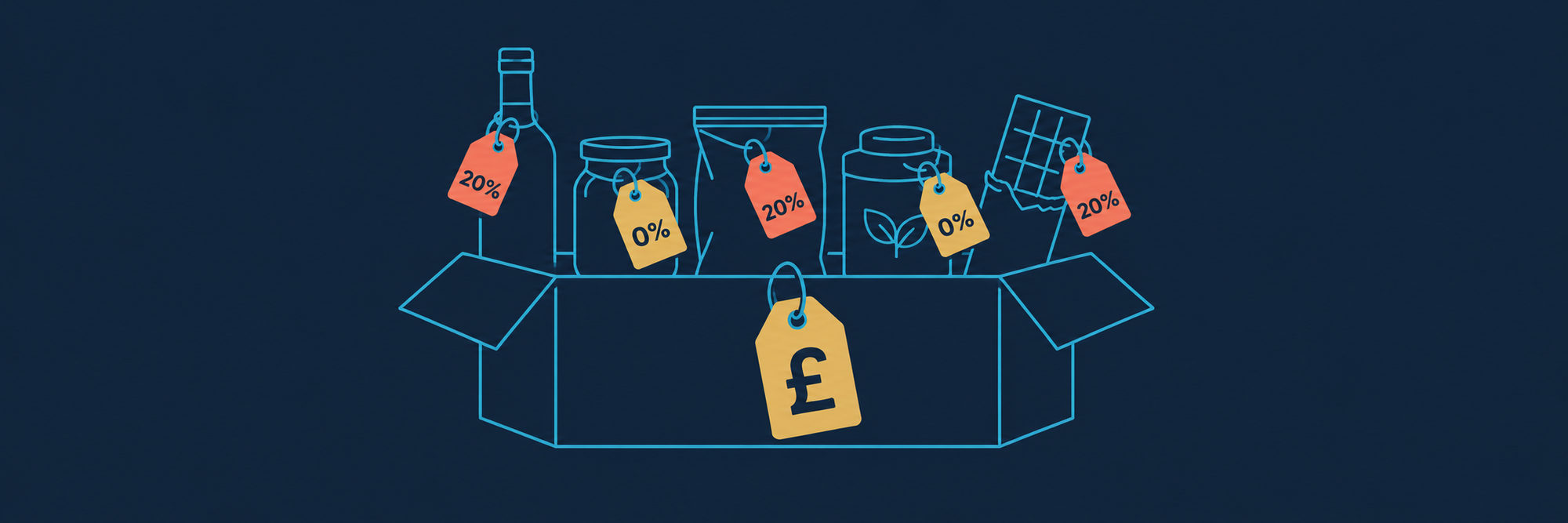
Some warehouses pick each hamper from its components when the order lands. Others pre-pack a batch in October and stock it as an item in its own right. The ERP needs to know which, as it decides whether a sale takes one hamper off the shelf or eight separate things.
Tax is where fixed kits catch people out. Biscuits and tea are zero-rated, while the wine and chocolate carry the standard rate. HMRC generally treats a hamper like this as a mixed supply, so the single selling price gets apportioned between the rates on a fair and reasonable basis, commonly the relative values of the contents [verify]. Even the basket has case law behind it. A 2026 tribunal decision held that a lidded basket was ancillary to the food and drink inside, so it shared their VAT treatment [verify].
On one hamper project, finance worked out the VAT for each item in the box and added it up. Our platform normally calculates VAT as a percentage of the price, so we added separate unit price and unit VAT fields for every item to match. A small change. Had we assumed one flat rate across the hamper, we'd have found out after launch, with the ERP and the website disagreeing on every sale.
The configurator
The customer makes choices, say size, strength and finish, and the price is computed from the answers. The pricing side is covered in why configurable products have no single price.
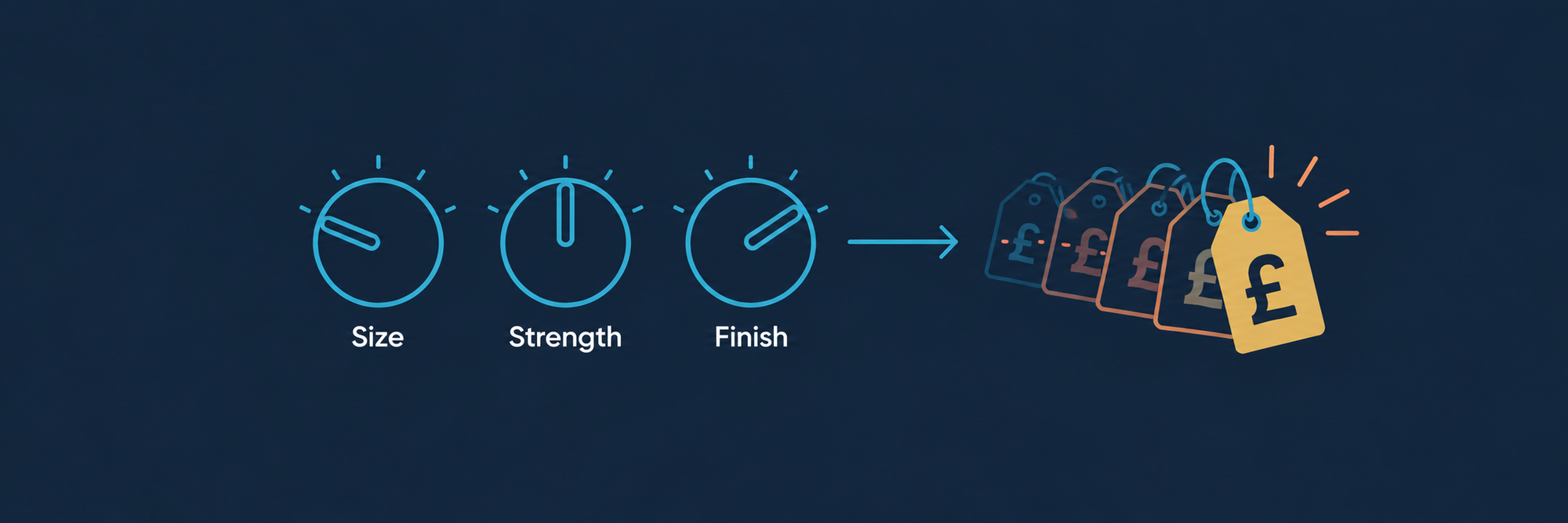
Configurators start getting called bundles once the add-ons are things you also sell on their own. The warehouse works from a pick list or a works order. In the ERP, the order lands as either a configured item or a parent line with option lines underneath, and those report very differently. If finance wants margin on the add-ons, it needs the option lines, so settle that before anything gets built.
VAT is less of a worry here. It follows the main product, as the options form part of one item.
The build-your-own selection
Think of a mixed case, any twelve beers from a list of twenty. The customer fills a grid while a counter ticks down, and pays either a fixed case price or the sum of the bottles less a discount.
Stock is the hard part. A mixed case has none of its own, so it's only as available as the emptiest beer in the pool.

Now one beer sells out while it's sitting in someone's half-built case. Somebody has to decide whether the platform blocks the case or asks the customer to swap the bottle. If nobody decides, the order goes through and the warehouse sorts it out, usually by phoning the customer.
In the ERP each bottle normally becomes its own line, with the discount spread across them somehow. Someone should choose how.
The assembled product
Take a custom-built PC. Its parts also sell on their own, the price is the sum of those parts, and compatibility rules decide what fits with what (this motherboard takes that memory). Then somebody has to build it.
Building means a bill of materials and a works order, plus someone's time at a bench. Components leave stock and a finished machine enters it, and the finished machine is what ships.
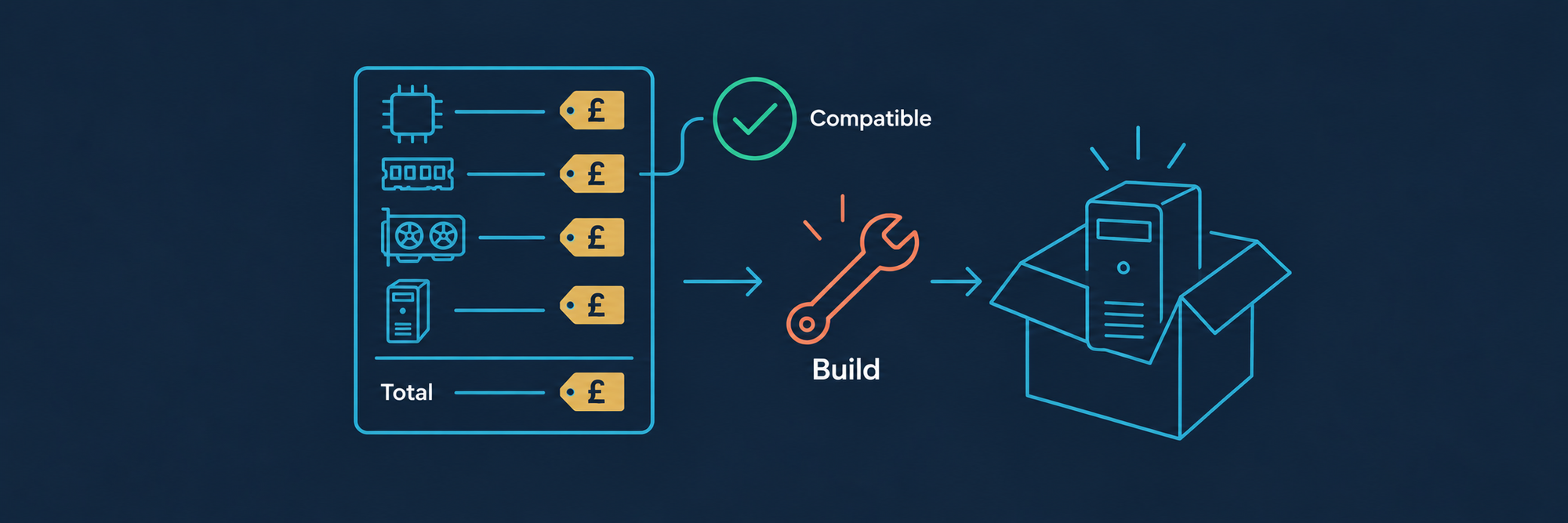
This is manufacturing dressed as e-commerce. The ERP will treat it as production, and if the website treats it as a basket with a discount, the two will disagree about stock within a week.
For VAT, the PC is a single supply of the finished product. Mixed rates inside one are unlikely.
Where the differences bite
Returns come up first. Someone sends back one bottle from a mixed case. Refunding it at list price hands back more than they paid for it. Refunding its share of the discounted case is fairer, though harder to explain on a returns page. With a hamper, someone will want to keep everything except the wine. Leave it undecided and customer services will write the policy one email at a time.
Discounts stack in ways nobody planned. When a site-wide 10% code lands on a bundle that's already discounted, someone should have decided on purpose whether it applies at all, and whether it comes off the bundle total or each component.
Finance wants revenue by component, for margin. Trading wants it by bundle. The order lines can carry both if they're designed to from launch.
A pre-packed hamper reserves a hamper, while a picked-to-order one reserves eight components. A mixed case might reserve at add-to-basket, or not until checkout. Stock reservations do the most damage when left vague, so we'd settle them first. Get them wrong and three different bundles can each sell the last unit of the same popular component, and the customer finds out from a cancellation email.
Build one out loud
This exercise settles most of it in half an hour. Get trading, finance and someone from the warehouse into a room with whoever owns the ERP, and pick one bundle you want to sell. Walk it out loud from the customer's first click to the box leaving the warehouse, writing down each decision as it comes up.
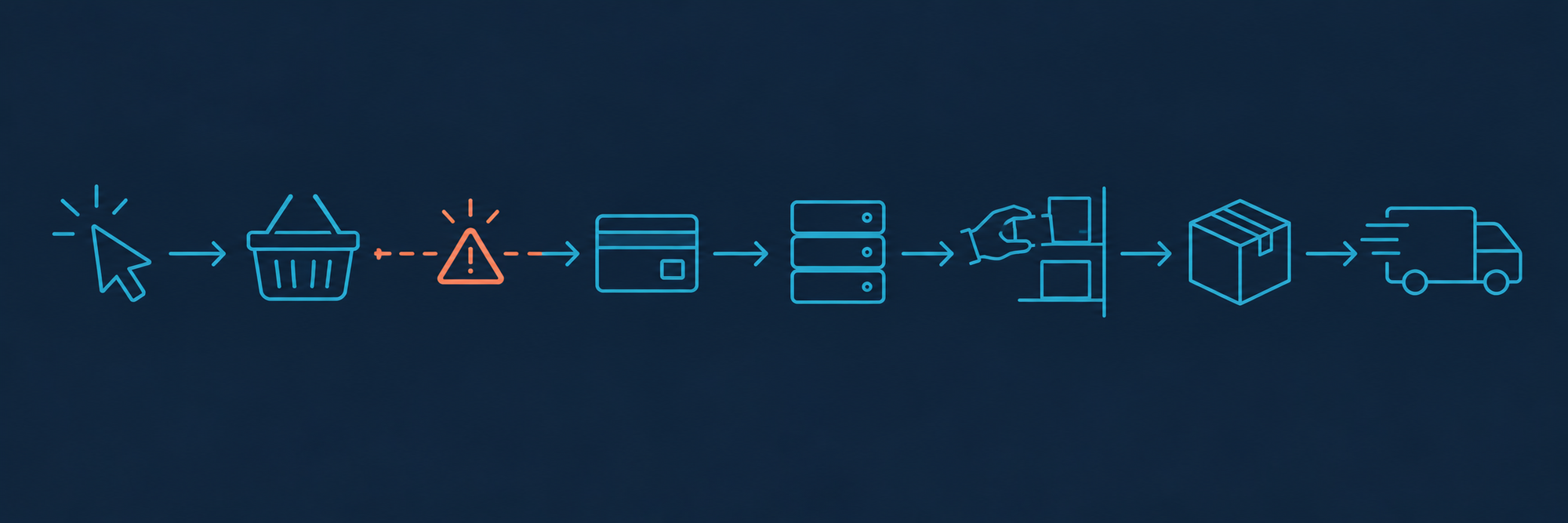
It rarely gets past the basket before somebody says "hang on". Stock usually breaks first, and in our experience the warehouse lead spots it before anyone else. VAT follows soon after, when finance asks what rate the invoice line will show.
If you get four different answers, good. That's the cheapest this argument will ever be.
Writing a bundle requirement an agency can build from
"Support bundles" can't be estimated. For each bundle you plan to sell, a usable requirement says which type it is, what's fixed, what the customer chooses, and how stock and tax behave. Two short examples:
Christmas hamper (fixed kit). Eight fixed components, no customer choice. Pre-packed in October and stocked as its own item. VAT worked out per item and summed, so each component holds its own unit price and unit VAT, and the ERP receives a zero-rated line and a standard-rated line. Returns accepted for the whole hamper only.
Mixed case (build-your-own). Any twelve from a pool of twenty beers at a fixed case price. Availability calculated from the components. If a chosen bottle sells out before checkout, the customer is asked to pick a replacement. Each bottle recorded as its own order line with the discount spread evenly, and single bottles refunded at that discounted share.
An afternoon is enough to agree two paragraphs like these. They'll save weeks of rework, and quotes from different agencies become comparable.
Questions to ask your agency or platform
- Which of the four bundle types does the platform handle as standard, and which need custom work?
- When a bundle order reaches our ERP, what does it look like: one line, a parent with child lines, or something else?
- Where is the VAT for each bundle held, and who updates it when the contents change?
- How is availability worked out for a bundle that has no stock of its own, and at what point is stock reserved?
- What happens to a partial return, step by step, in the website and in the ERP?
Be wary of any answer that begins "it's just a product with a discount on it". That holds for some fixed kits and very little else.
Agreeing which bundle you meant
If you've agreed to sell bundles and haven't yet pinned down which kind, that's the conversation our Discovery phase is built for. We'll take your bundles through the website and the ERP, then out onto the warehouse floor, with your team in the room. You'll leave with a requirement any agency can price and build.
The other episodes of The questions we ask, each with a short video, are at tsd.digital/questions.