What Actually Is Web Personalisation and Why It Could Be Worth More Than Magic Beans
Personalisation isn't just saying "Hello Jack." It's a spectrum from basic recognition to invisible anticipation. Here's what each level looks like and the data you need to get there.
 Tim Gaunt
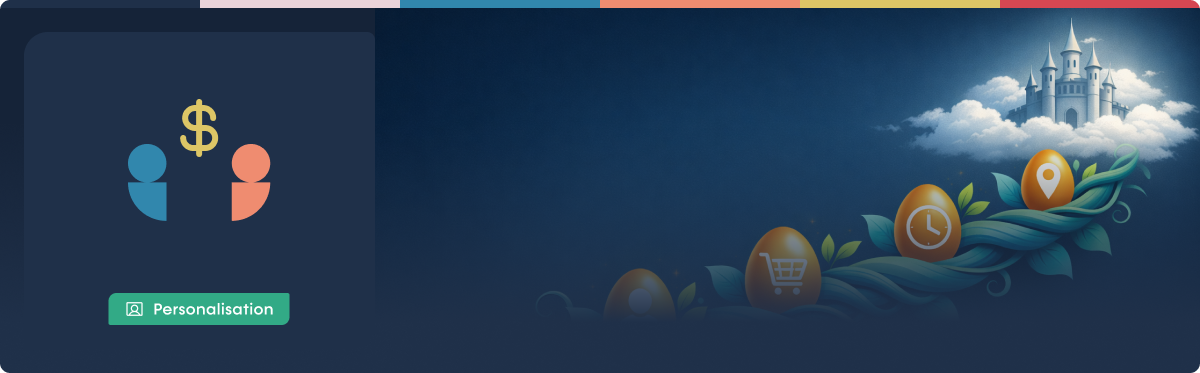
Over the Christmas break, while at the panto, I realised we might have skipped a step. We've been writing about win-back campaigns that drive 19% of monthly sales, search data that predicts demand weeks in advance, and timing algorithms that know when customers are ready to buy again. But we've never actually explained what personalisation is or how deep it can go.
So let's fix that.
The Greeting Card Test
Think about the difference between these two New Year messages:
Version A:
Happy New Year! We hope you had a lovely Christmas and the year ahead is a good one.
Version B:
Happy New Year Jack! We hope you and Dame Trott had a lovely Christmas and the year ahead is a good one. Bought any magic beans recently?
Both are perfectly nice messages. But the second one feels different. It acknowledges that the sender knows you, remembers your mum's name, and recalls your unfortunate history with livestock transactions. It takes a generic sentiment and makes it personal.
This is personalisation at its simplest: using what you know about someone to make communication more relevant.
Version B doesn't require a sophisticated AI system. It requires knowing three things: the recipient's name, their family situation, and something about their purchase history. With that information, a generic message becomes a personal one.
Now apply that thinking to your website, your emails, and your entire customer experience.
The Personalisation Spectrum
Most businesses think of personalisation as binary: you either have it or you don't. In reality, it's a spectrum with distinct levels. Each one requires different data and delivers different results.
Level 1: Basic Recognition
This is the "Hello Jack" level. You know the customer's name and maybe their email address. You can greet them when they log in, address emails properly, and remember they have an account.
It's the bare minimum, but you'd be surprised how many B2B sites still show "Welcome, valued customer" to logged-in users. Even basic recognition signals that you're paying attention.
Level 2: Historical Awareness
Now you're using what they've done before. They bought running shoes last month, so you show them running accessories. They browsed your sale section three times, so you highlight new markdowns. They always buy on Fridays, so you send emails on Thursday evenings.
This level uses purchase and browse history to make educated guesses about what they might want next. It's the "customers who bought this also bought" territory.
Level 3: Behavioural Prediction
Here's where things get interesting. Instead of reacting to what customers did, you're anticipating what they'll do.
You know their average purchase cycle is 45 days. On day 35, you send a gentle nudge. You notice they've been browsing your premium range but buying entry-level products. Maybe they're ready for an upgrade. They've searched for "gift" three times in December. They're probably shopping for someone else, not themselves.
This is a prediction based on patterns, and it's where the real value starts showing up.
Level 4: Contextual Intelligence
Now you're combining what you know about the customer with what you know about the world around them.
They're browsing from a mobile device at 9pm. Probably at home, likely in research mode rather than ready to buy. They're in Scotland and it's January, so winter products move up the page. They visited from a link in your email about a specific product, so you show that product prominently rather than making them hunt for it.
Context turns static personalisation into something dynamic and responsive.
Level 5: Invisible Anticipation
The highest level of personalisation is often invisible. Customers don't think "that was personalised" - they think "that was helpful" or "that site just gets me."
The homepage shows different content based on whether someone is a trade customer or retail buyer, without any manual selection. Product recommendations appear in exactly the right order. Emails arrive at the exact moment they were thinking about reordering. The checkout remembers their preferences and removes friction before they notice it.
When personalisation works best, customers don't see the mechanics. They just feel understood.
The Data Ladder
Each level of personalisation requires different data. Here's roughly what you need:
For Level 1 (Basic Recognition): Name, email address, account status.
For Level 2 (Historical Awareness): Purchase history, browse history, search queries, time on site. Or in Jack's case, "customers who traded cows for beans also needed a good axe."
For Level 3 (Behavioural Prediction): Purchase frequency patterns, average order value trends, category preferences over time, seasonal buying patterns.
For Level 4 (Contextual Intelligence): Device and location data, traffic source (email, search, direct), time of day patterns, external factors like weather, events, and seasonality.
For Level 5 (Invisible Anticipation): All of the above, synthesised. Plus customer segment characteristics, lifecycle stage indicators, and intent signals.
The good news? Most e-commerce platforms already collect this data. The gap is usually in connecting it to customer experiences.
Visible vs. Invisible
There's an interesting design question here: should personalisation be obvious or subtle?
Visible personalisation - "Hi Jack, based on your recent purchases, you might like these" - builds trust through transparency. Customers know you're using their data and can see the value exchange. It works well for recommendations and targeted offers.
Invisible personalisation - quietly reordering products, adjusting timing, changing page layouts - creates seamless experiences without drawing attention to the mechanics. It works well for reducing friction and smoothing out the journey.
Most effective personalisation strategies use both. You show enough to demonstrate value and build trust, while quietly optimising everything else in the background.
Where Most Businesses Get Stuck
Having worked on personalisation projects for over a decade, we see the same patterns come up again and again.
Starting too big. Businesses try to implement Level 5 sophistication before they've nailed Level 1 basics. Get the fundamentals right first: proper account recognition, sensible email addressing, basic purchase-history awareness.
Forgetting the human element. Personalisation should feel helpful, not creepy. There's a line between "we remembered you like blue" and "we noticed you were browsing at 2am on Saturday, is everything okay?" Context matters.
Over-engineering the technology. Some of the most effective personalisation we've implemented uses simple rules and basic data. You don't always need machine learning. Sometimes you just need to send reorder reminders at the right time.
Ignoring B2B. Consumer sites get all the attention, but B2B buyers are humans too. They appreciate recognition, relevant recommendations, and experiences that don't waste their time. Often more so than retail customers, because their time is explicitly valuable.
A Starting Point
If you're wondering where to begin, here's a simple framework:
- Audit what you know. What data do you actually have about customers? Names, purchase history, browse patterns, search queries? Make a list.
- Identify the gaps that matter. Where are customers getting generic, one-size-fits-all content when you could be more relevant?
- Pick one win. Don't try to personalise everything at once. Choose one touchpoint (maybe abandoned cart emails, maybe the homepage for logged-in users) and do it well.
- Measure properly. Track not just engagement but actual outcomes. Did personalisation increase conversion? Revenue? Customer satisfaction?
- Build from there. Each level of personalisation you master gives you the foundation for the next.
Coming Back to the Greeting Card
Remember those two New Year messages? The difference between Jack feeling like a valued acquaintance versus just another name on the mailing list came down to three pieces of information used thoughtfully. (Though perhaps we should avoid recommending any more beans.)
Your e-commerce personalisation journey works the same way. You don't need a massive data science team or six-figure marketing automation investment to start. You need to use what you already know about customers to make their experience more relevant.
The businesses that do this well don't just increase their conversion rates (though they do). They build relationships where customers feel known rather than anonymous, valued rather than processed, understood rather than sold to.
That's what personalisation actually is. Everything else is just technique.
This post is part of our ongoing series on e-commerce personalisation. While other posts in the series cover specific techniques like win-back campaigns and predictive timing, we thought it was worth stepping back to cover the basics. If you want to talk about where personalisation could improve your customer experience, we're always happy to have that conversation. We promise not to sell you any beans.