From Napkin Sketch to App: How We Validate Product Ideas
How do you decide what products to build? We assume everything takes three times longer than estimated and markets are three times smaller than we think. Sounds pessimistic. Turns out to be fairly accurate. Here's the validation framework we use at TSD to avoid wasting months on ideas nobody wants.
 Tim Gaunt
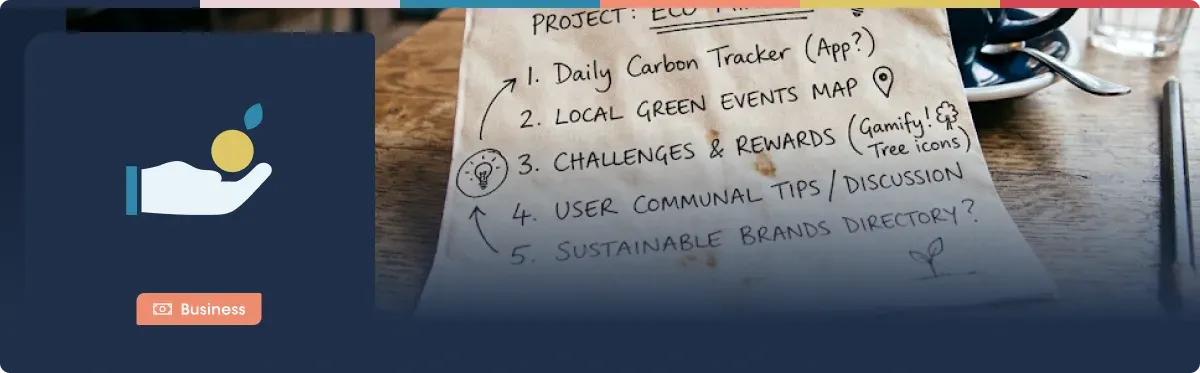
After my post about why agencies should build products, several people asked the obvious follow-up:
How do you decide what to build?
Fair question. You could spend years building the wrong thing. We have.
So here's the process we use at TSD to validate ideas, size markets, and decide what's worth the investment. This isn't theory. It's the framework that's helped us avoid wasting months on products nobody wants.
Where Ideas Come From
First rule:
Don't limit where ideas bubble up from.
Good product ideas come from your team, your clients, your own frustrations, overheard conversations at conferences, or that moment at 3am when you can't sleep.
At TSD, we keep it simple. Anyone can suggest a product idea. Drop it in a shared document, Slack channel, or just mention it in a team meeting. No formal process, no bureaucracy. Just capture it.
Some of our best products came from developers spotting patterns across multiple client projects. Others came from clients asking "doesn't anyone make a tool that does X?" Turns out, they didn't.
TrendSeam started because we kept seeing merchants struggle with basic analytics. Crisis Cover (which we sold in 2016) came from a the banking crisis when we were getting asked what happens if we go bankrupt. The idea was sitting right there in the work we were already doing.
The Agency Advantage: Built-In Market Research
Here's where agencies have a massive advantage over solo entrepreneurs: you've got dozens of potential customers you can soundboard.
When an idea surfaces, float it with clients. Not formally. Just mention it casually. "We've been thinking about building something that does X. Would that be useful to you?"
Watch how they react. If they get excited, lean forward, start asking detailed questions, you're onto something. If they politely nod and change the subject, bin it.
We've killed more ideas in 10-minute client conversations than we have in formal market research. It's brutal but efficient.
One warning though: clients sometimes say they'd use something to be polite. What you're looking for is genuine excitement. The kind where they interrupt you to describe exactly how they'd use it. That's validation.
The 12-18 Month ROI Rule
Once you've got interest from a handful of potential customers, it's time for the uncomfortable bit: maths.
We need to know two things.
How much effort will it take to build? And how big is the potential market?
Your team will underestimate the first and overestimate the second. Every time. They're optimistic. It's lovely but dangerous.
At TSD, we assume everything will take three times longer than estimated and the market is three times smaller than we think. Sounds pessimistic. Often turns out to be fairly accurate.
Then we apply our core rule:
Can we recoup the initial investment within 12-18 months?
If the numbers don't work at that timeframe, we don't build it. This constraint has saved us from pursuing "great ideas" that would have taken years to become profitable.
Does this limit the complexity of products we build? Absolutely. But it also means we actually ship things instead of abandoning them halfway through.
Two Products Per Year (Maximum)
A few years back, we tried building multiple products simultaneously. Four at once, at one point.
Disaster.
None of them got proper attention. Client work took priority (rightly so, they're paying the bills). The products became side projects. Side projects don't ship.
Now we focus on launching two products per year maximum. Either internal products that complement our client base, or joint ventures.
In the first half of last year, we worked on Igloo Theme Commerce for Umbraco, a commerce addition to our popular site builder package. Second half, we're updating Igloo to support Umbraco version 17.
Two products. Proper focus. Actual completion.
This constraint forces prioritisation. If you can only do two things, you pick the two best things. Everything else goes in the "maybe later" pile.
Joint Ventures: The Delicate Dance
We've done products solo and as joint ventures. Both work. Both have pitfalls.
Joint ventures sound appealing. You bring technical expertise, they bring domain knowledge or an existing customer base. Split the equity, split the work, everyone wins.
Reality is messier.
The challenge is making sure both parties feel appropriately remunerated for their investment. As the technical provider, you feel you're bringing everything (the actual product). Meanwhile, the subject matter expert feels their industry knowledge is the most valuable component.
Both parties genuinely believe they're contributing more than the other. This isn't bad faith. It's human nature.
We've turned down joint ventures where the balance felt wrong. Not just in shareholding, but in mutual respect. That's hard to do when you're excited about an idea. But staying in an imbalanced partnership degrades the product because resentment creeps in.
The joint ventures that worked? They had crystal clear divisions drawn in the sand from day one. Who owns what. Who does what. What happens if someone wants out. Get this on paper before you write a line of code.
Festive Sparkle was a joint venture we ran for two Christmases before stopping. Profitable, successful by most measures. But the workload on both sides was untenable and there was a waning interest in bringing in new stock. We shelved it because the partnership wasn't sustainable long-term, even though the product worked.
Sometimes walking away from something that works is the right move.
Agency Partnerships Beat Merchant Marketing
Here's something counterintuitive: marketing to agencies is more effective than marketing to merchants.
Getting a client excited about installing your app? Great. That's one install.
Getting an agency excited about your app? They'll potentially install it across their entire client portfolio. Plus they'll recommend it to new clients. One conversation generates dozens of installs.
When we launched TrendSeam in 2017, we focused on merchant marketing. Got some traction. But the real growth came when agencies started recommending it.
One agency partnership delivered more installs in a month than three months of merchant-focused marketing. Plus those installs stuck around. When an agency recommends a tool, merchants trust it more than a random app they found in the marketplace.
Now we spend more time building relationships with other agencies than running merchant ads. Different approach, better results.
The Market Size Reality Check
You need to be honest about market size, even when it's disappointing.
Crisis Cover was designed to protect businesses when they felt their provider was at risk of going out of business. Decent niche. But "decent niche" means limited ceiling.
We built it knowing we'd never have 1M customers. Maybe a few thousand at most. That was fine. The pricing model and development effort matched the market reality.
TrendSeam potentially has a much larger market (every online store whether it's Shopify/Magento/Ucommerce/WooCommerce merchant). But "potentially" is doing a lot of work in that sentence. Actually reaching them? Different challenge entirely.
When you're sizing markets, be brutally realistic. Count the customers you can actually reach, not the total addressable market some business plan template tells you to calculate.
Your actual market is people with the problem, who know they have the problem, who are actively looking for a solution, and who will find your product. That's a much smaller number than "everyone who might benefit."
When to Kill an Idea
Sometimes validation fails. Client reactions are lukewarm. Market size is tiny. Development effort is massive.
Kill it.
We've got a folder called "Good Ideas, Wrong Time" where these live. Not "Bad Ideas" - they're genuinely good. Just not right for us now.
Some have sat there for years. A few have eventually become products when circumstances changed. Most will stay there forever.
That's fine. The goal isn't to build everything. It's to build the right things.
What We're Building Next
The two-products-per-year constraint means we're always planning ahead.
Currently evaluating three ideas for next year. One is an internal tool that would help our project management. One is in the divorce space, another is a potential joint venture in the compliance space. One is an expansion of TrendSeam's capabilities.
We'll validate all over the next few months. Test with clients and agencies. Run the numbers. Pick the two that pass our 12-18 month ROI rule.
The rest? Into the "Good Ideas, Wrong Time" folder it goes.
Your Turn
If you're considering building a product in your agency:
Start capturing ideas now, even if you're not ready to build. Test ideas casually with existing clients. Assume three times the effort and one-third the market. Apply the 12-18 month ROI rule ruthlessly. Focus on one or two products maximum. Get joint venture agreements crystal clear before starting. And consider agency partnerships over end-user marketing.
Next time, I'll talk about platform dependency, why building on Shopify, Umbraco, or any third-party platform is both opportunity and existential risk. Including what happened when our daily TrendSeam installs suddenly stopped.
What product ideas are sitting in your "maybe one day" list? Drop a comment - I'm curious what other agencies are considering.